01
Separate prediction from policy
A calibrated probability is not itself a business action; routing remains visible and independently adjustable.
SR / SIGNAL SYSTEM / 001
DATA → MODELS → SYSTEMS
SIGNAL / 001
IDENTITY LOCKED
SNEH RAUNAK
AI / ML × SOFTWARE ENGINEERING
ML systems / decision intelligence
Synthetic-data reference implementation
A transparent fraud-risk workflow demo built to make modelling, policy, and review surfaces inspectable.
What it is
A transparent fraud-risk workflow demo built to make modelling, policy, and review surfaces inspectable.
What it demonstrates
SentinelFlow joins event-time features, a trained model, calibrated policy routing, and an operator-facing dashboard while keeping the synthetic-demo boundary explicit.
My role
Independent builder
Project status
Public synthetic demo
Risk workflows can hide important modelling and policy choices behind a single score. Operators need the score, its operating context, and a clear boundary between inference and action.
SYSTEM MAP
FLOW
01
A calibrated probability is not itself a business action; routing remains visible and independently adjustable.
02
Redis supports bounded stateful signals without pretending the demo is a live banking integration.
03
MLflow keeps model runs and related artifacts inspectable.
04
Dashboard language frames outputs as decision support rather than autonomous fraud decisions.
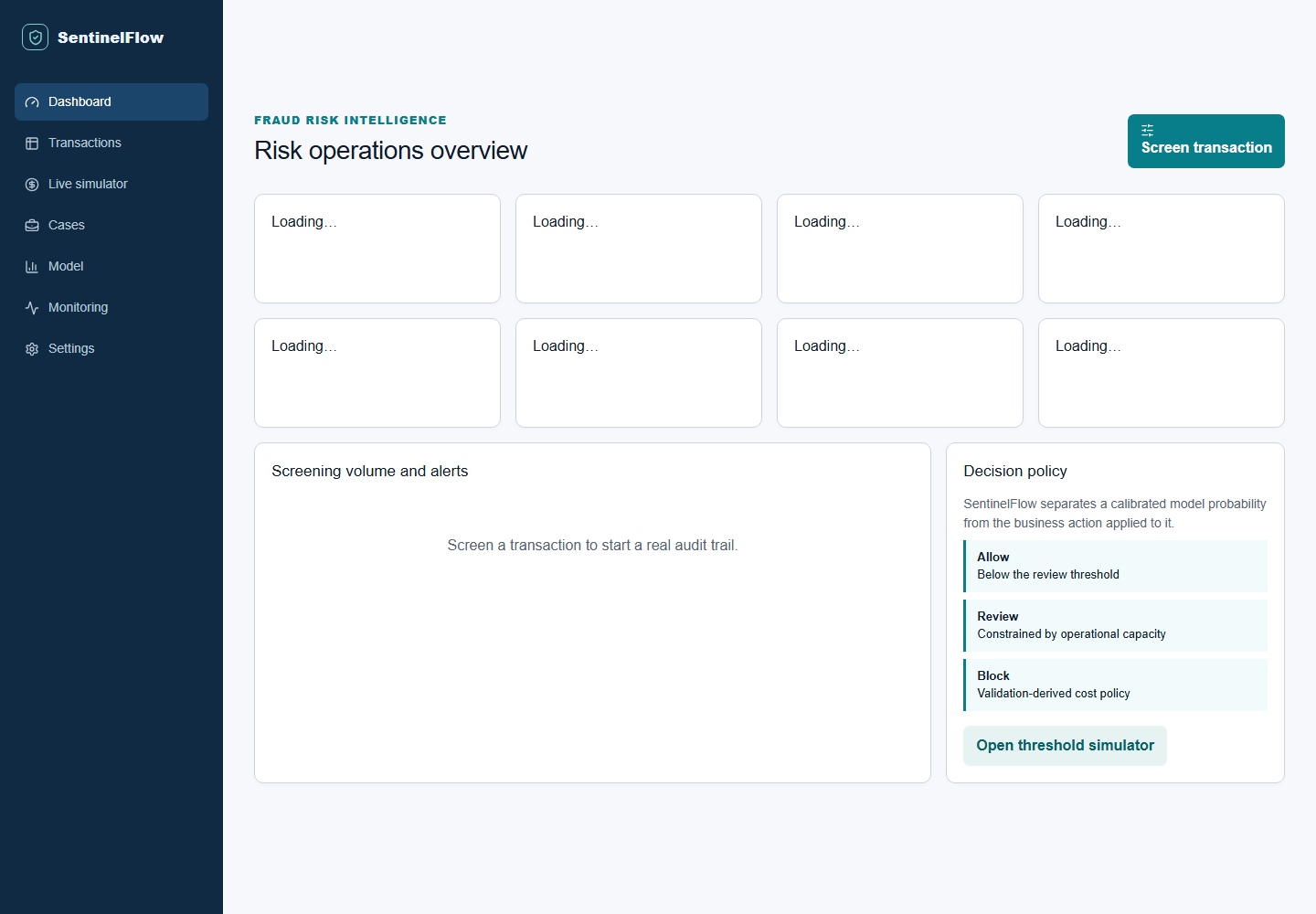
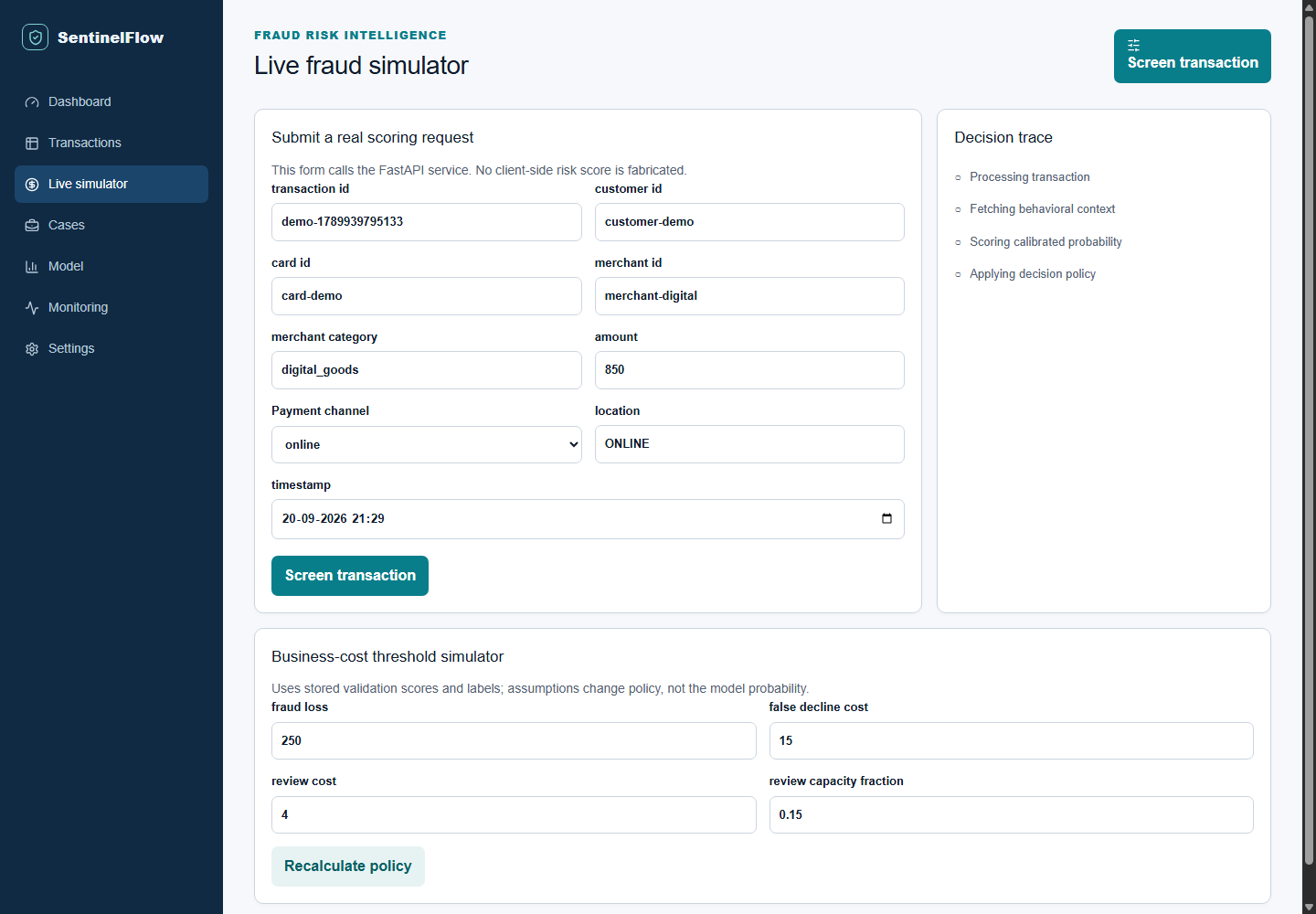
A score needs policy context to be operationally useful.
Temporal evaluation matters when events have order.
Clear demo boundaries build more trust than inflated production claims.